Planting the Seeds of Sustainability
Hello Decomposers,
Welcome back to Compost Corner. Happy November!
Towards the end of October, I led two children-focused compost activity days. And I think I'm on to something...
Compost is the perfect way to guide children into educational activities and away from screens. First of all, we've discussed how you cannot screw up compost a few times on this blog.
Second of all, compost is fun. Like, the most fun.(!!!)
But let's get into the activities and the indoctrination of young minds. (In a fun way!)
On the last Monday of October, I spearheaded a field trip for a very adorable local 3K class. Lessons were learned, fun was had, and only a handful of red wigglers were traumatized in the pursuit of decomposition and education.
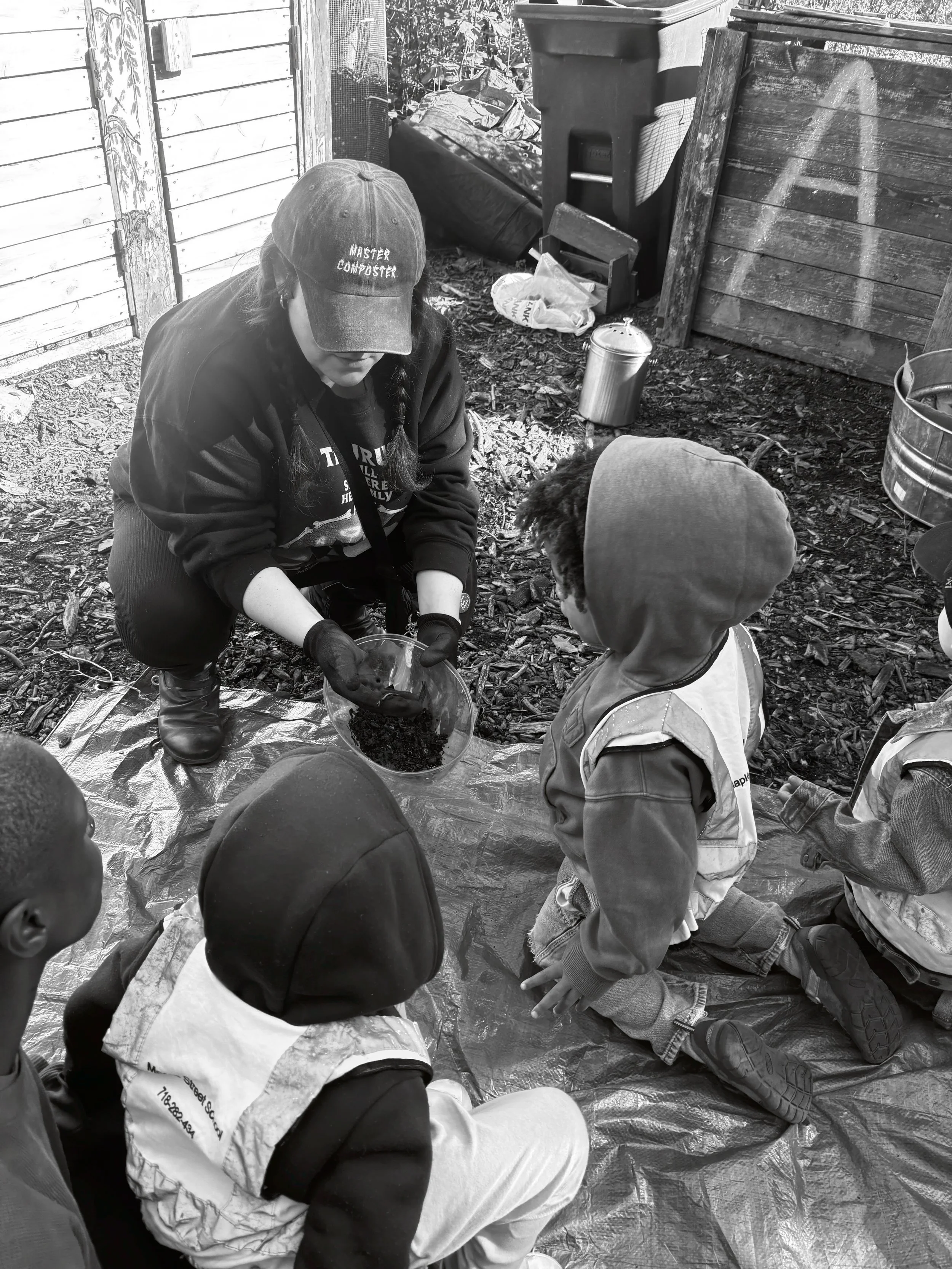
Photo by Kevin W.
Mother Nature smiled on us that day. We had perfect fall weather. We began the field trip by gathering around the bins on a tarp to meet some hard-working worms. A few handfuls of worms and vermicompost were moved into a small plastic bowl so the children could get a closer look at our worms. They were the rockstars of the day.
The children were careful not to touch, but instead to observe with their eyes. They were also blown away, as I am, by the idea of "worms with jobs." Then we gathered together to read a wonderful children's story about composting, Worm Makes a Sandwich by Brianne Farley. I could not recommend this book more. Using a worm narrator, Brianne takes us through the life cycle of a plant and gives children the language and tools to learn about composting.
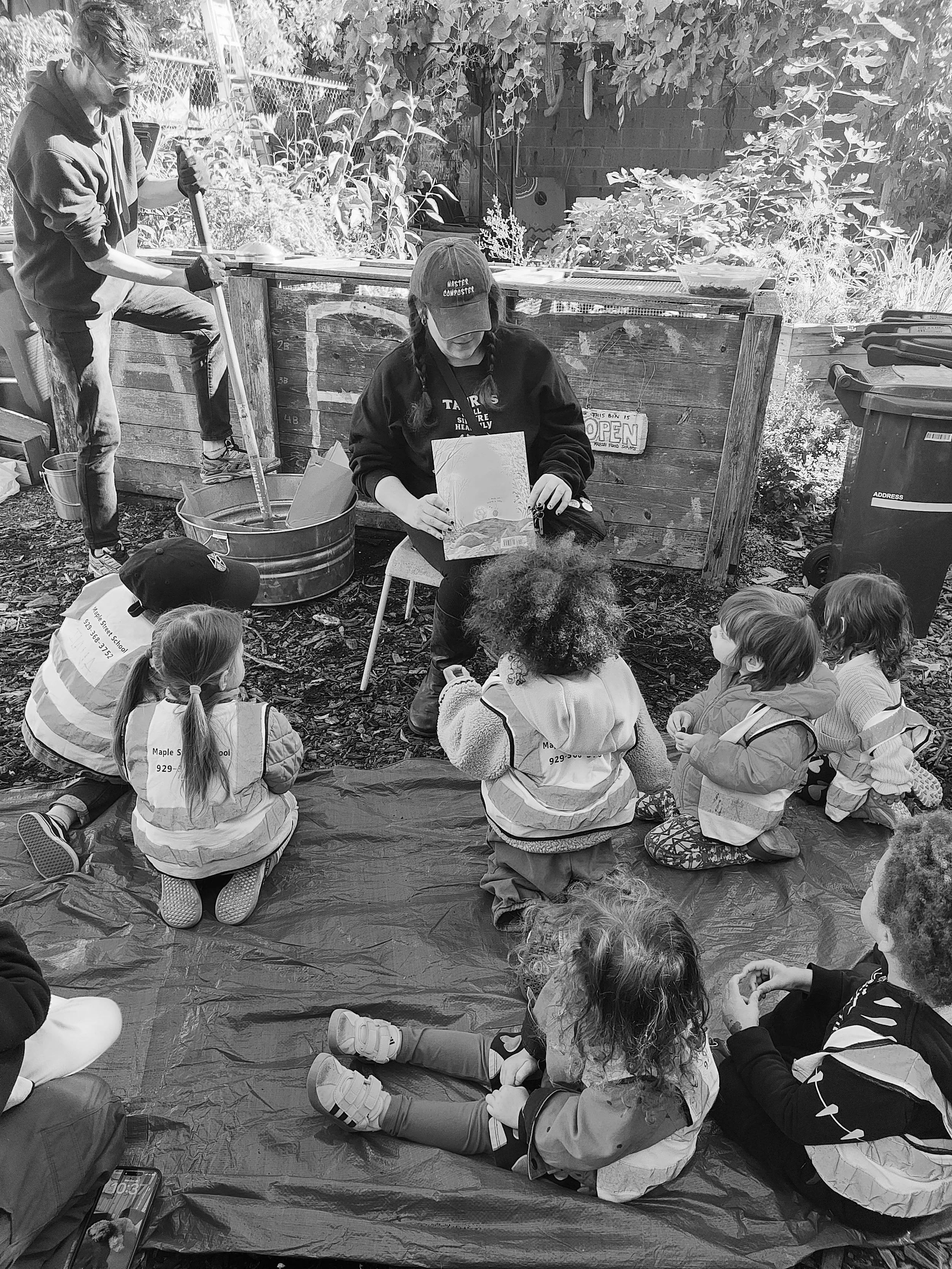
Photo by Hannah
Because that's the thing with kids. They learn quickly and adapt to new information in a way a lot of us have forgotten. Suddenly, they're remembering to put their scraps in the compost bin to feed the hungry worms and rolly polys. They're the ones telling their families, "Don't put the pumpkin in the trash!" and "That's not where the top of the carrot goes."
The children will save us all if we let them.
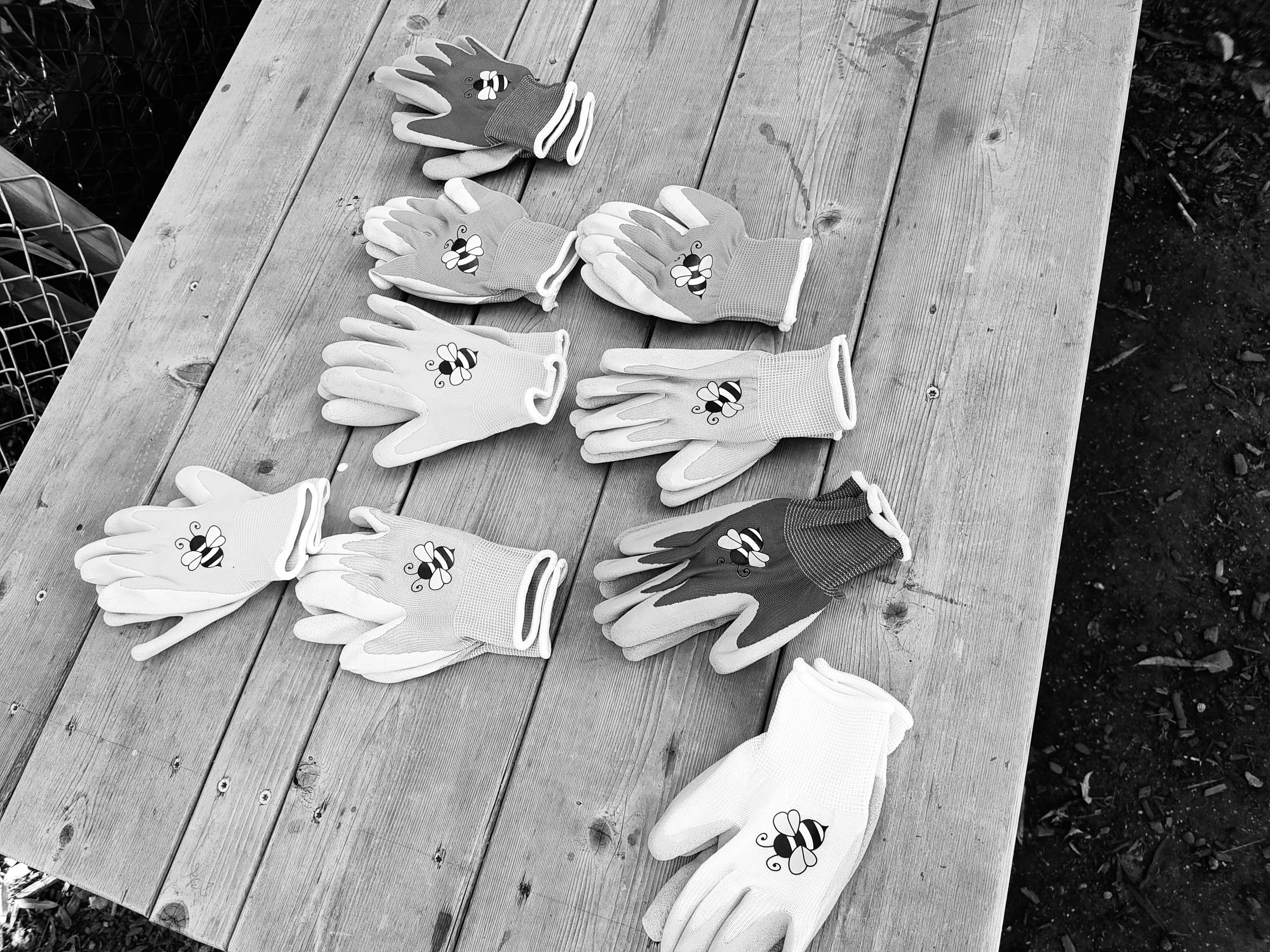
Photo by Zhenia N.
Each child was sent home with a goody bin packed with love by our dedicated garden elders, Brenda, Arlene, and Keiko. The bins were filled with seeds and soil, crayons and a compost coloring sheet (made by yours truly, I’ve learned Canva thanks to MSCG), candy, and snazzy kids gardening gloves. Gardens are one of the last third spaces for intergenerational engagement, and these little goody bins were a perfect example of that. It takes a community to grow a garden, and it takes a community to help grow the next generation of gardeners (and composters).
But the field trip didn't end when the children left the garden. After Monday's visit, the kids asked their teachers to replace their purple sand table in the classroom with soil. The teachers added small gardening tools, and the kids have found something new to focus on and learn about. I love that something as simple as a morning spent with worms could make its way back into their everyday classroom experience.
That Saturday was Halloween, and at MSCG we had planned an event called "Crafts, Candy, & Compost." While it was intended for all ages, there was a child-friendly lean. Arts Committee member Rachael DePalma created ink using food scraps. Originally, we had intended for this to be a more adult-themed activity and provided chalk and coloring for the youth, but they surprised us. They dove right in and painted their little hearts out.
And that's another thing about children. Sometimes we underestimate just how much they're capable of, or how willing they are to try something new. Give them the opportunity, a little guidance, and some room to explore, and they'll surprise you.
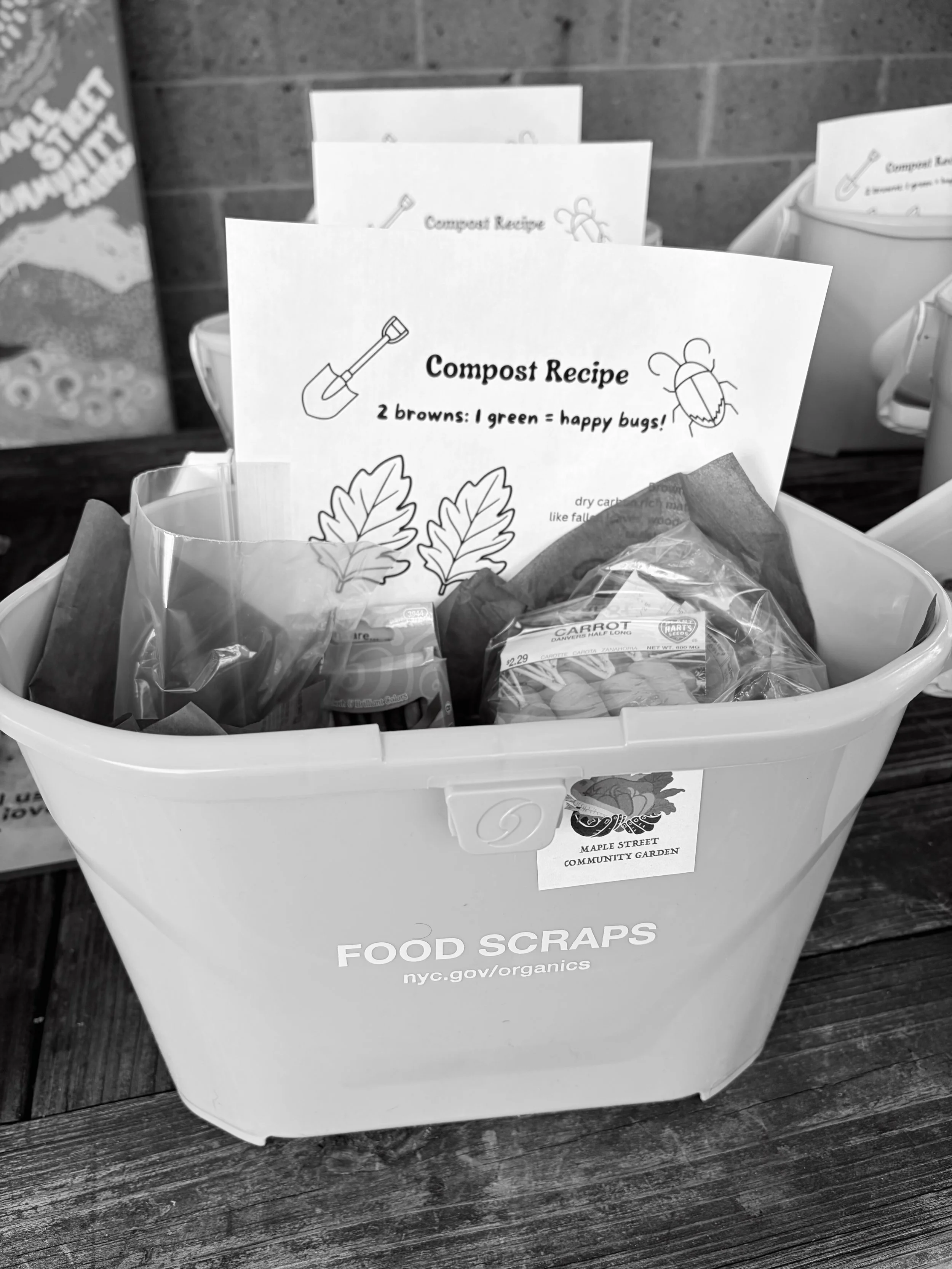
Photo by Jess F.
Community gardens provide safe third spaces for everyone, but especially for young minds. They are places of exploration, education, engagement, and practice. Children learn from hands-on experience and begin to formulate their own perspectives on the ideals of circular sustainability. They can plant a seed, watch it grow, steward over it, harvest the crop, and return the scraps to make compost and feed the beds for the next round of crops.
These spaces provide hands-on experiences to people who are growing up in a day and age filled with screens and virtual reality. Here, children get to touch the soil, see the worms, watch things grow, make a mess, ask questions, and learn by doing. They get to understand that the things we throw away aren't necessarily waste, that the food we eat comes from somewhere, and that we all have a role to play in keeping that cycle going.
And maybe that's what I'm really on to. Compost is a pretty wonderful way to introduce children to the big ideas of sustainability, stewardship, and community. But more than that, community gardens give children a place to be curious, get their hands dirty, and feel like they are part of something bigger than themselves.
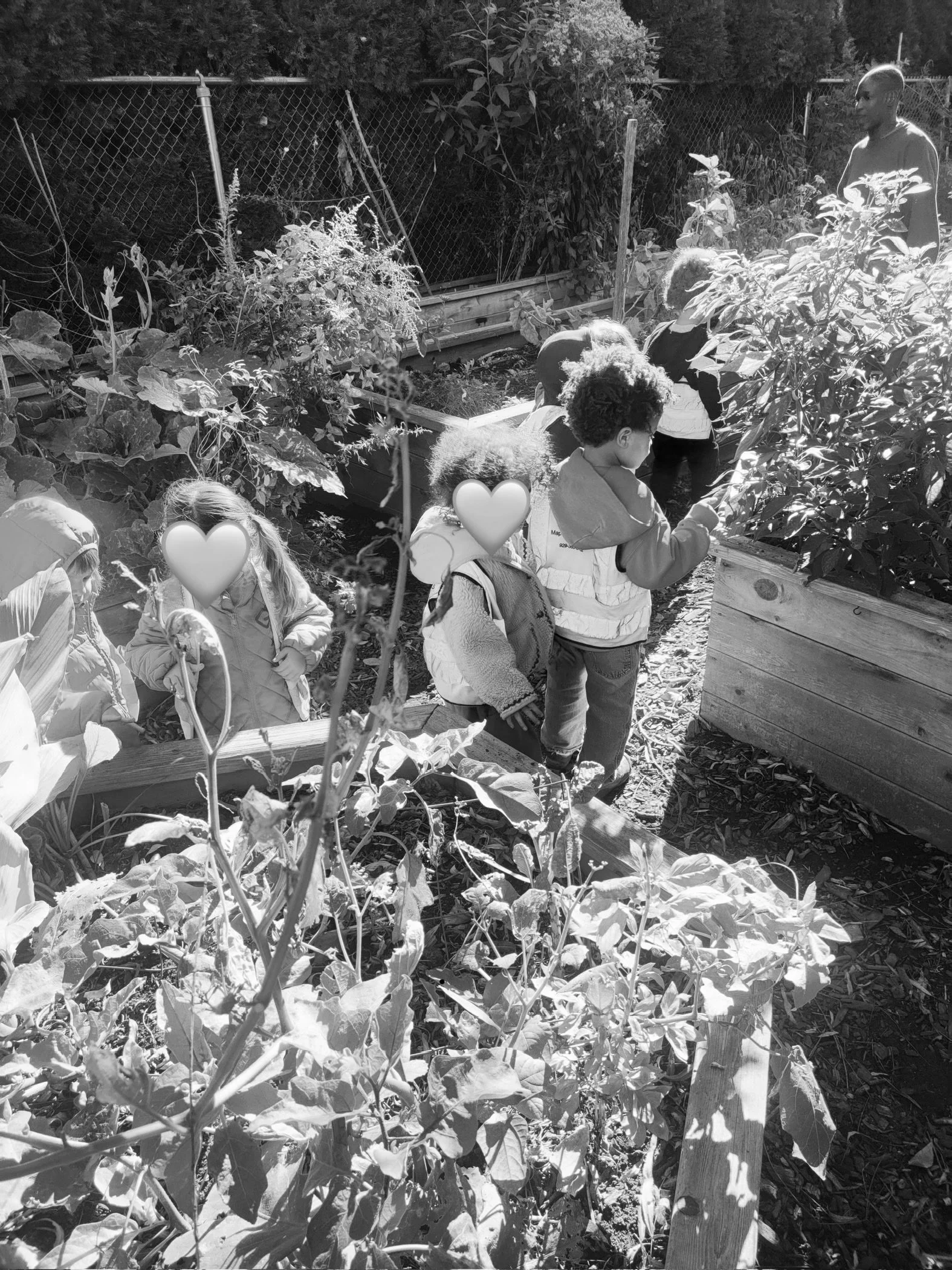
Photo by Jess F.
So, if you ask me, we need more worms, more dirt, more garden field trips, and fewer screens. The indoctrination continues.
With grit & gratitude,
Jess Frost, Master Composter
Co-Coordinator, MSCG Communication and Compost Committees