
There’s a Place for You on Shift: Composting & Capacity
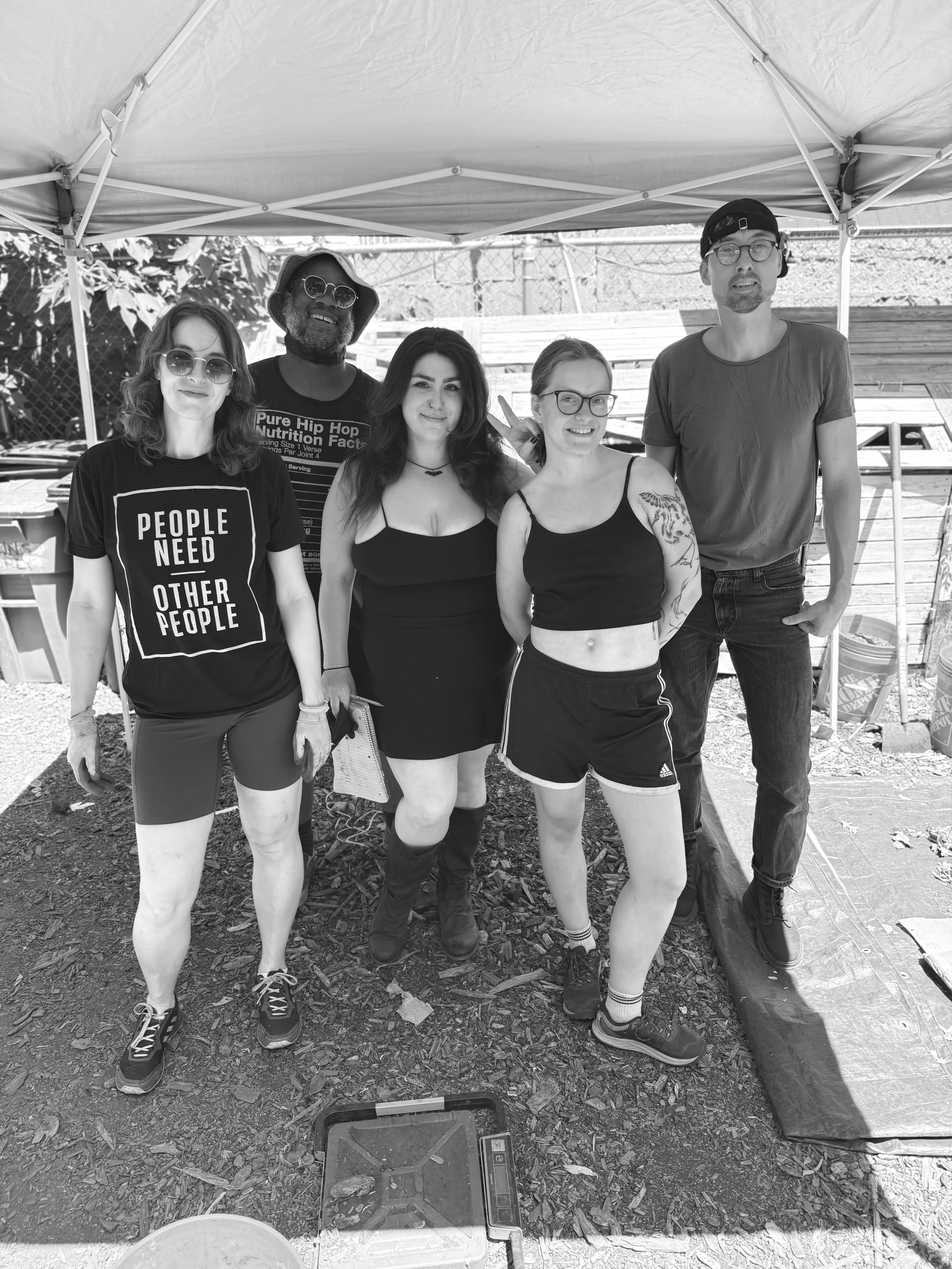
6/20/26 Crew, photo by Kevin W.
Hello Decomposers,
Welcome back to Compost Corner. Let’s talk about capacity, sustainability, and how they relate to a composting shift.
This Saturday shift, a neighbor rolled into the Maple Street Community Garden with a big bucket of food scraps and a half-smoked (unlit) joint hanging out of his lips. The donation was one of our largest of the day, and when we asked if he wanted to chop, he said he had a very busy day and would appreciate if we could chop for him.
There’s a lesson here. Capacity and knowing ourselves. It’s one I’m grappling with currently as I’m still building back up my stamina after my brush with death.
I must confess that with my illness, I had not worked shift this season. I’ve been to the bins to say hi, check in, be nosy, and of course feed the worms, but I hadn’t been on shift until this weekend. And I wasn’t even on schedule.
I had nine containers stuffed with scraps (including a very, very stinky pineapple corpse) and a free Saturday morning, so when someone called out sick, I knew it was time to rip off the Band-Aid.
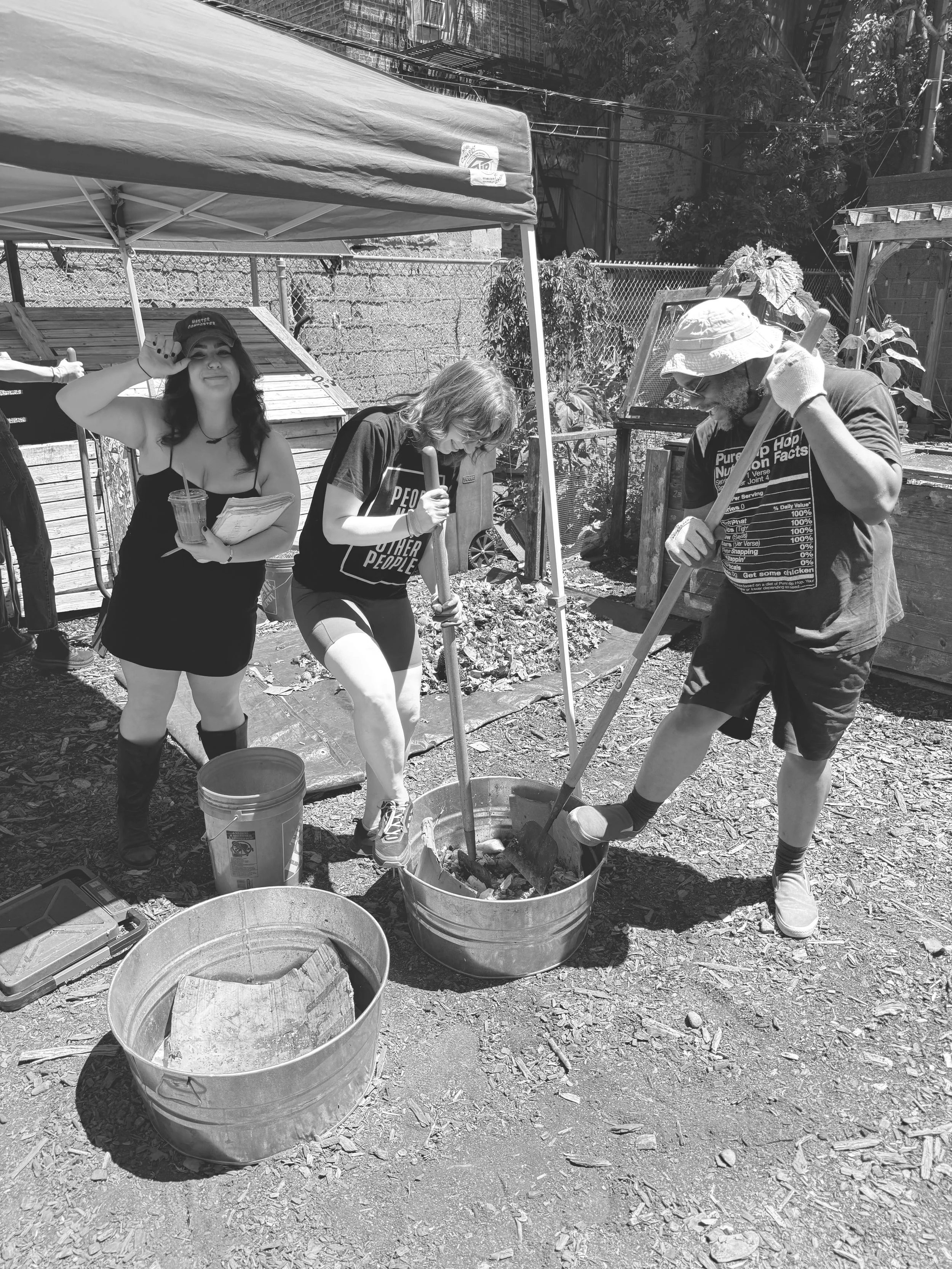
photo by Kevin W.
But mostly I ran the clipboard, greeting people, taking names, and logging donations. (Data collecting is important!) Our shift was tasked with filling and turning Bin A, which had nothing but some brown leaves and a few chunks of overs, so I got to flex my Master Composter education and help supervise a new batch. We also moved Bin 1 into Bin 2, and Bin C into Bin 1. Aerating the batches is a key part of the process.
My hands were briefly reunited with my beloved edger friend when I took a few extra whacks at my mostly chopped scraps, but in terms of capacity, while I wanted to shovel, edge, pitchfork, and lift, I’m not quite there. My shift friends were so kind to pick up the slack and still cheer on what effort I could give.
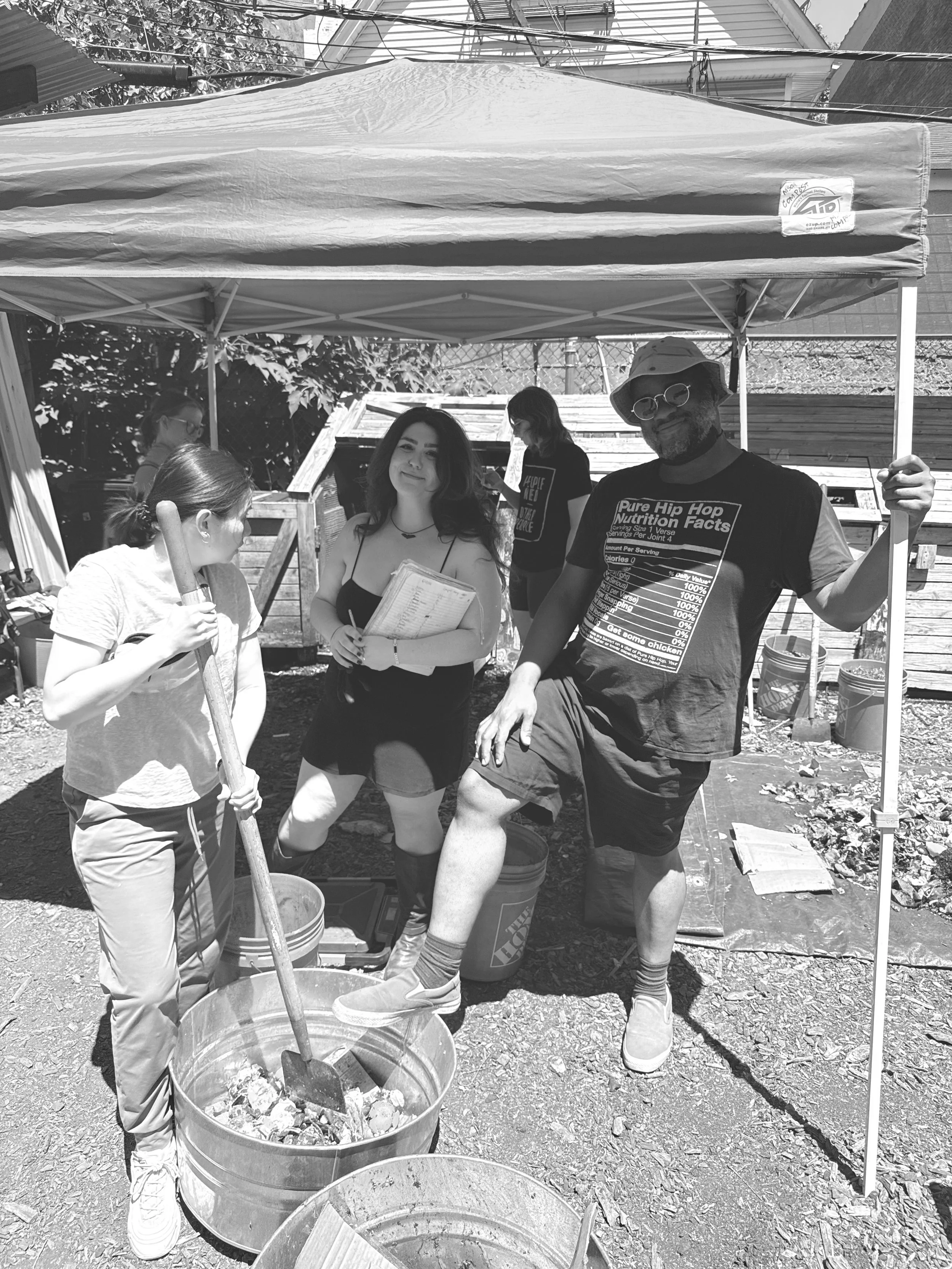
photo by Kevin W.
Nearly two months after my near death, my body still isn’t where it was, and that’s okay. I could still work a shift, even if it was super hot and I couldn’t do everything. It just felt good to be gloved up and getting steam facials from the compost heat.
It got me thinking about all the different roles that make a shift run smoothly.
Two people usually run the chop buckets, though that can become three if needed. If things are slow, the third bucket and extra chopper can become a self-chop station. Choppers fill orange buckets with each donation, weigh them, and dump them into the communal orange bucket. To keep our 2:1 browns-to-greens recipe, the browns manager (another key shift role) keeps two buckets of diverse browns filled and ready for every orange bucket of greens.
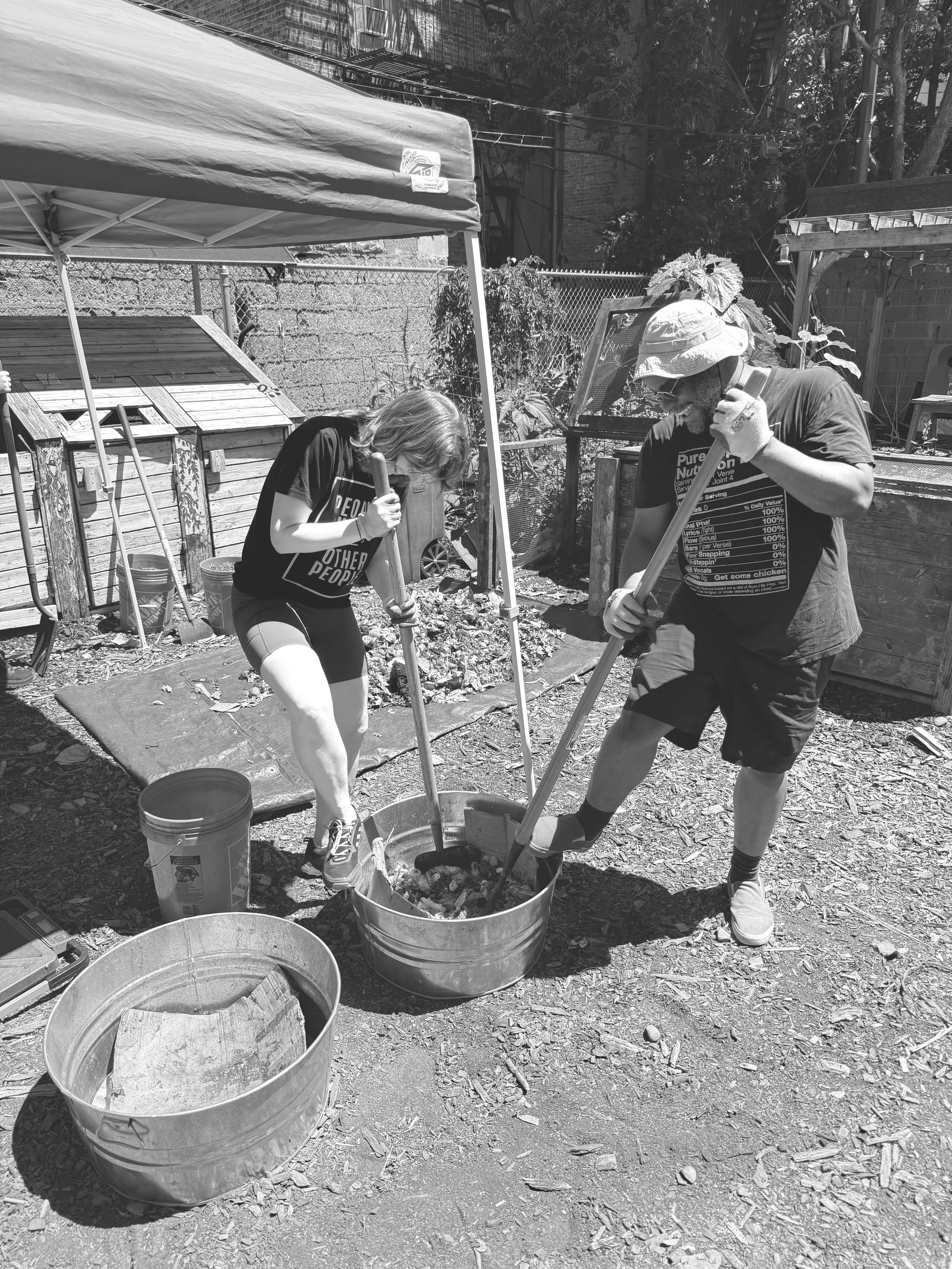
photo by Jess F.
Two aerators pull a bin out with shovels and pitchforks into a windrow shape to introduce oxygen into the batch. Depending on how many bins we’re turning, this role usually sees the most rotation because it’s one of the more physically demanding jobs. On Saturday, as I wrote earlier, we moved two bins. We used a wheelbarrow, tarps, and shovels to masterly move the compost.
One or two people work the sifting table, running compost through the metal cloth and into the wheelbarrow while also filling bags of compost to give away. Right now, we don’t have any finished compost unfortunately so this job is on pause until we do.
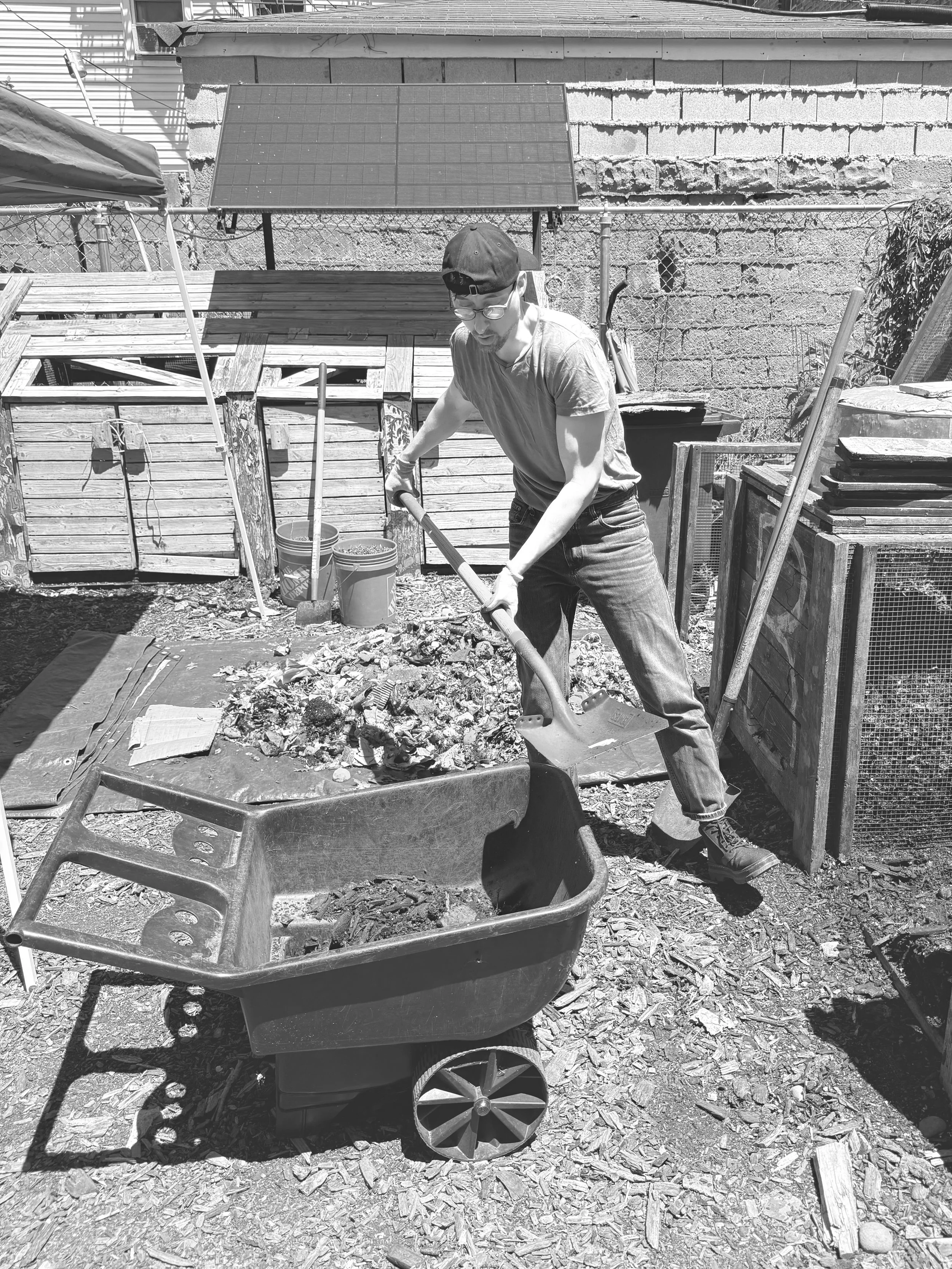
photo by Kevin W.
Finally, there’s data collection. Someone logs donations into the notebook and enters the data into the Google Form at the end of shift. This is usually done by a shift leader. Our shift chopped 134.5 pounds of food scraps, creating a new batch with overs and brown leaves. We live filled A, so we moved the batch onto a tarp and then put the donations directly into the windrow. We also decided to auger at the end of shift to ensure the greens were evenly distributed.
The thing about composting is there is something for everyone on shift. Roles rotate. People step in where they’re needed. Some days you’re aerating bins in the heat. Some days you’re chopping. Some days you’re running the clipboard.
Capacity is a constantly evolving state. Knowing what you can do, and what you can’t do today, is just as important as showing up. This weekend reminded me that even when we can’t give 100 percent, there’s still a place for us in the pile.

photo by Kevin W.
Knowing your capacity is key to finding your sustainability. We discuss sustainability in terms of our environment, but composting teaches us it’s also within ourselves. If I had thrown all my effort and waning stamina to prove a point, I think I would’ve failed pretty epically. My body would’ve given out and next shift would’ve been met with severe anxiety.
Instead, I will cherish the memory of a wonderful shift surrounded by friends who had my back. Composting is also about community, and just greeting neighbors and bonding with my fellow volunteers was food for the soul. Next Saturday I’ll be back to shift leading, and because I leaned into my personal capacity, I look forward to leading next week.

photo by Kevin W.
Finally, congratulations to my fellow Master Composter Graduates!
With grit & gratitude,
Jess F., Master Composter
Co-Coordinator, MSCG Communication Committee