Sprucing up for Spring: a special update from the Super Secret Worm Task Force
I’ve done it, decomposing friends.
I got the behind-the-scenes scoop from the Super Secret Worm Task Force.
Graphic by Jess Frost
The worms, red wigglers to be specific, were keeping cozy and passing the winter inside their vermibin in Bin 1. (Earthworms would not survive in a bin. They are not built for this lifestyle. Neither is this author.)
When Team Compost begins our winter hiatus in December, the worm bin is removed from the frame and the worms are placed into a separate bin for warmth. This winter was particularly cold and snowy, but the worms thrived anyway. As they do. Quietly. Mysteriously. (So much so the captains accidentally dug into the wrong bin, more on that later.)
The vermibin, or worm bin, looks a bit like a very large coffee filter. (It doesn’t smell like coffee, let’s just say that. And if you know me, I’m kind of a coffee expert.) Cone-shaped, opens from the top, very chic if you’re into that sort of thing. It sits in a metal frame that, until recently, had rusted and taken a true beating from the elements.
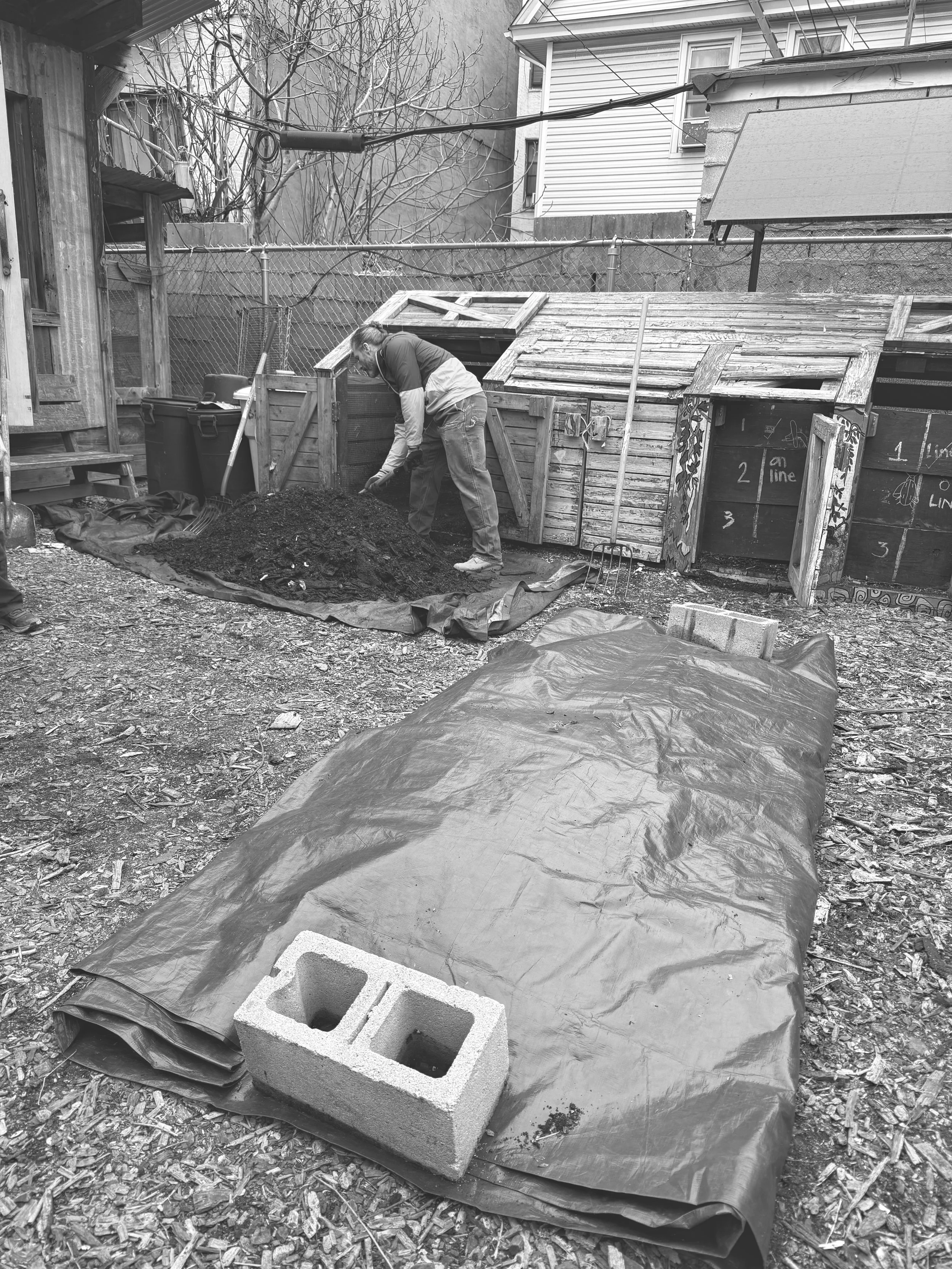
Photo by Jess Frost
Enter the new, anonymous co-captains of the task force. (I would tell you but I value my personal safety.) In complete secrecy, they built a new frame and moved the worms back into their regular home across from the water collector. I was lucky enough to witness this highly classified operation so I could give you all the gory details. (Hashtag Blessed.)
The captains carefully assembled the frame, snapping each piece into place like professionals. Then they confidently went into Bin 3 and began digging out the finished compost…until it became very clear the worms were not there.
Because the worms were in Bin 1. (but I digress…) Bin 3, for the record, was filled to the brim with finished compost. Beautiful, crumbly, useless-for-worm-survival compost. Finished compost does not generate enough heat and would not have been a sustainable winter cottage for our red wigglers. (Think feel good holiday movie, not horror film franchise.)
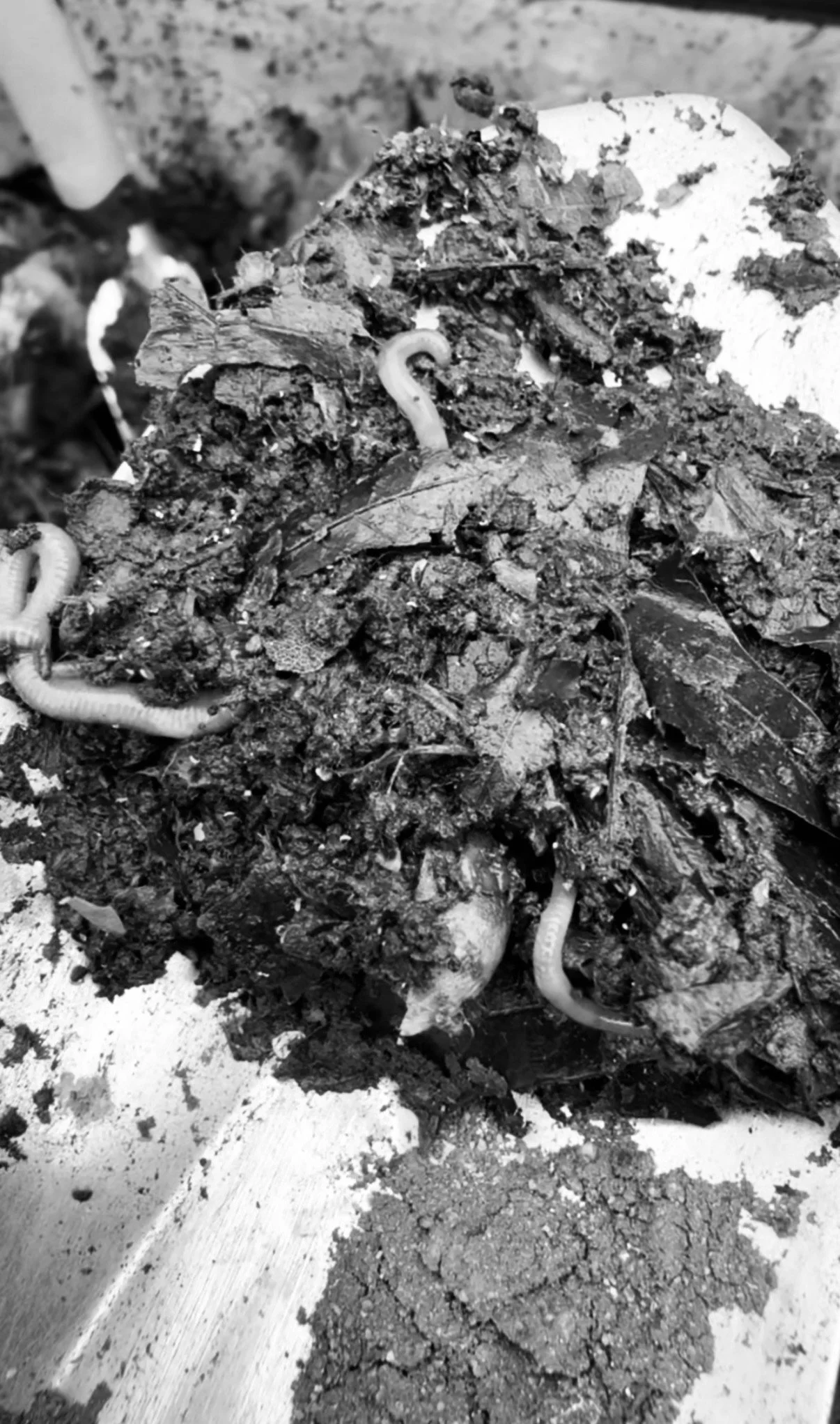
Photo by Jess Frost
Once the mistake was realized, the captains pivoted immediately to Bin 1 and uncovered the vermibin under a layer of browns sitting on top of the compost.
Then came the pièce de résistance: the new frame. Gleaming black metal, freshly assembled, catching the first rays of spring sunlight that sneaked through the reemerging leaves of the beloved willow tree. The captains lifted the vermibin with reverence and carefully set it into its sparkling new home. (Ok there may have been light giggling and high fives.) The Super Secret Worm Task Force’s new captains are off to a promising start.
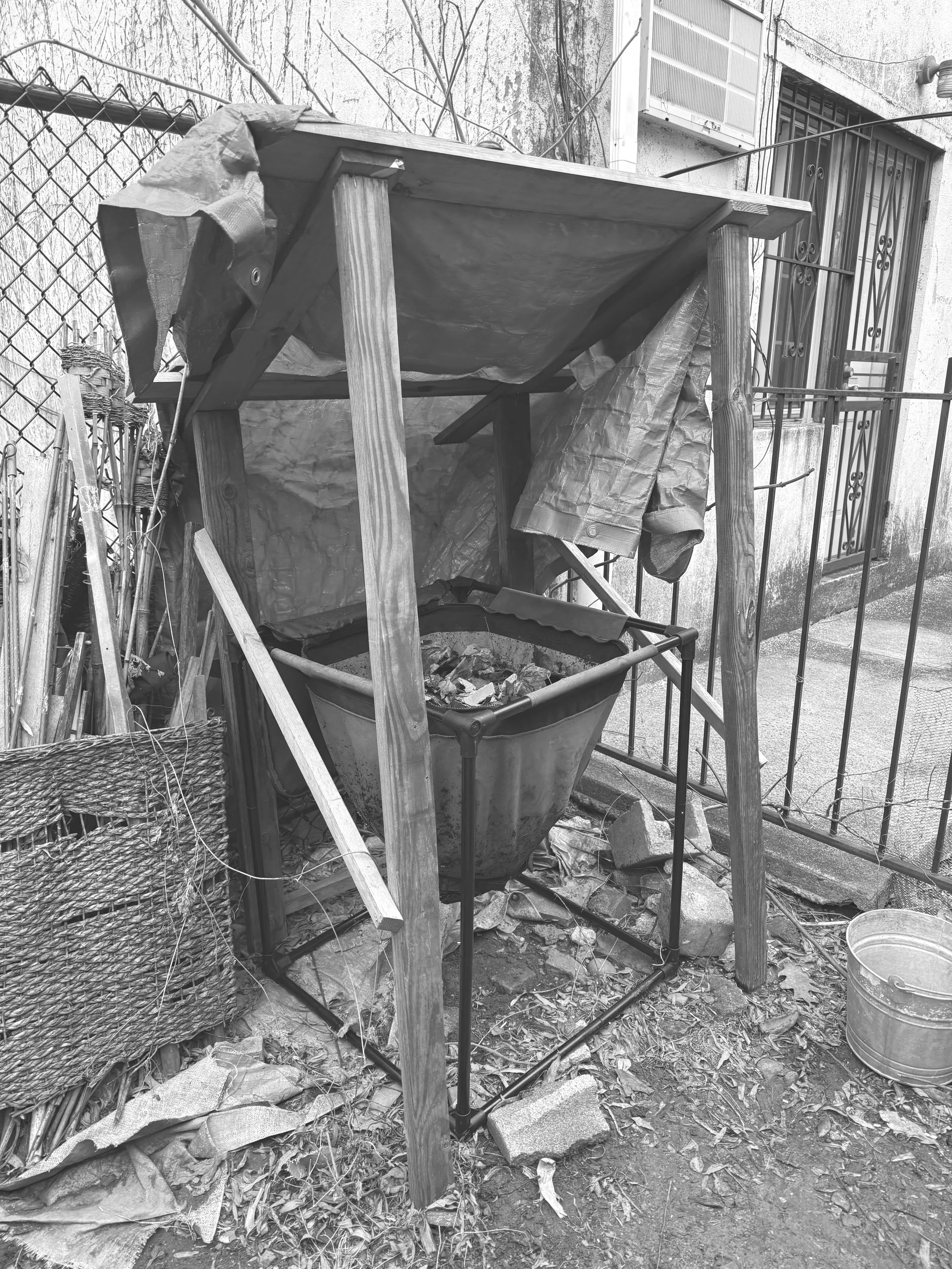
Photo by Jess Frost
While red wigglers thrive in high-moisture environments, they also need oxygen. The captains aerated the bin with their gloved hands and added fresh browns and greens. A proper meal after a long winter. These worms can eat up to half their body weight in scraps every day, which is both impressive and slightly unsettling. Red wigglers love eggshells, apple cores, banana peels, and other low-acidity foods (so skip heavy citrus or onions).
Eggshells in particular are excellent for stimulating reproduction, which, after a harsh winter, we would very much like to encourage. (Alexa, play some Marvin Gaye.) Browns like leaves and sawdust are just as important to keep everything balanced and functioning. Vermibins, like our other compost bins, thrive on a 2:1 ratio of browns to greens. (For every heap of food scraps, you want twice the browns.)
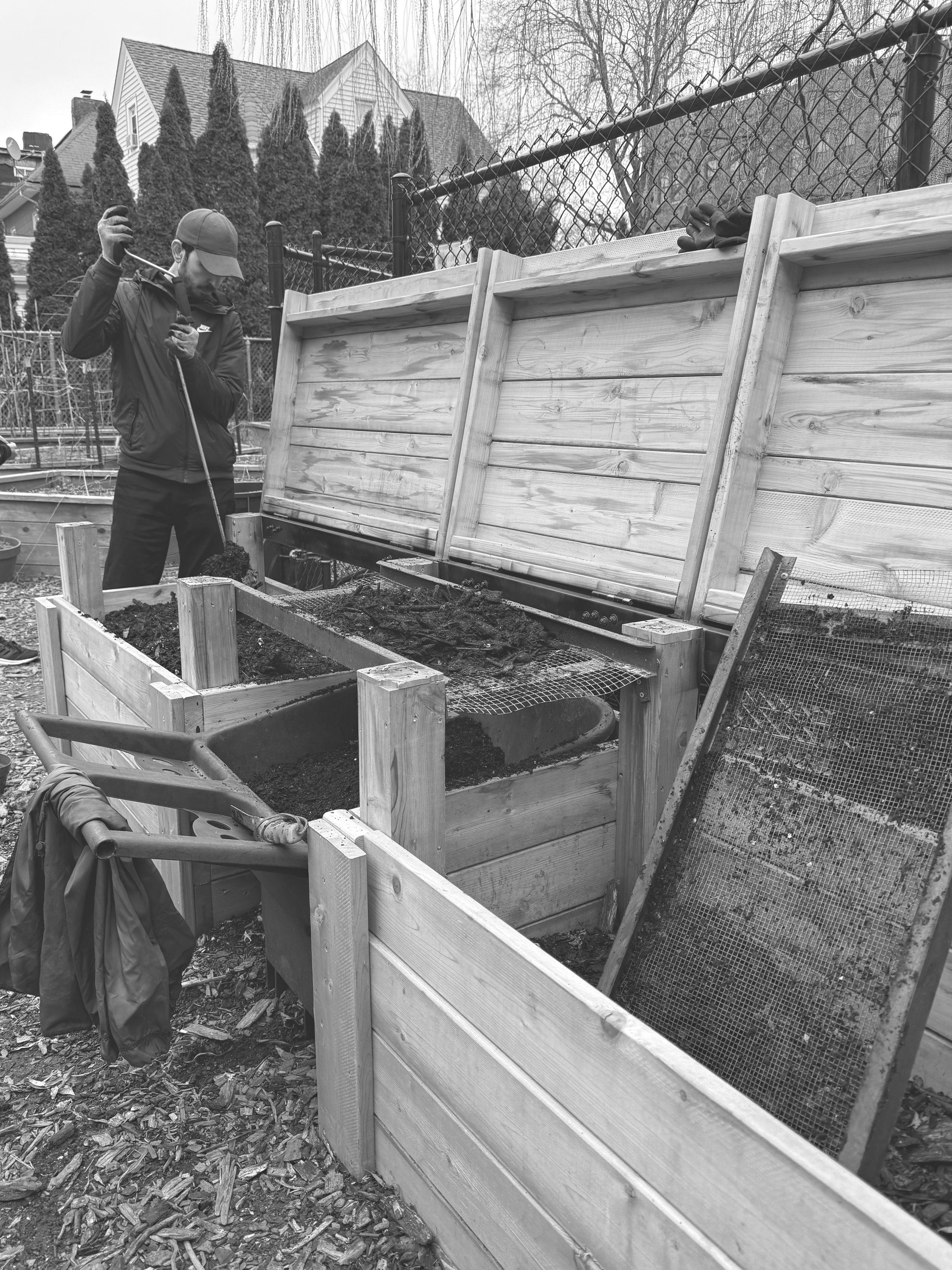
Photo by Jess Frost
Maybe you’ve made it this far and are wondering, why does the Maple Street Community Garden vermicompost?
Because worm castings and compost tea (both produced by our worm squad) are basically gold for garden beds. They are more biologically active than traditional compost, which is why plants respond to them so quickly.
Highly concentrated with nutrients and microbes, they support plant growth, improve soil health, and help with water retention. Small worms, massive impact.
The bin, now set into its new frame, takes up a small corner at MSCG, but what the red wigglers produce in that space is doing serious work.
When you bring your scraps to Drop-Off ( which resumes on April 4 at 10:30 am), feel free to bring a little something for the worms too. Someone on Team Compost will make sure the Super Secret Worm Task Force receives your contribution.
See you at the bins.
Your favorite future compost,
Jess Frost, Master Composter
Co-Coordinator, MSCG Communication Committee